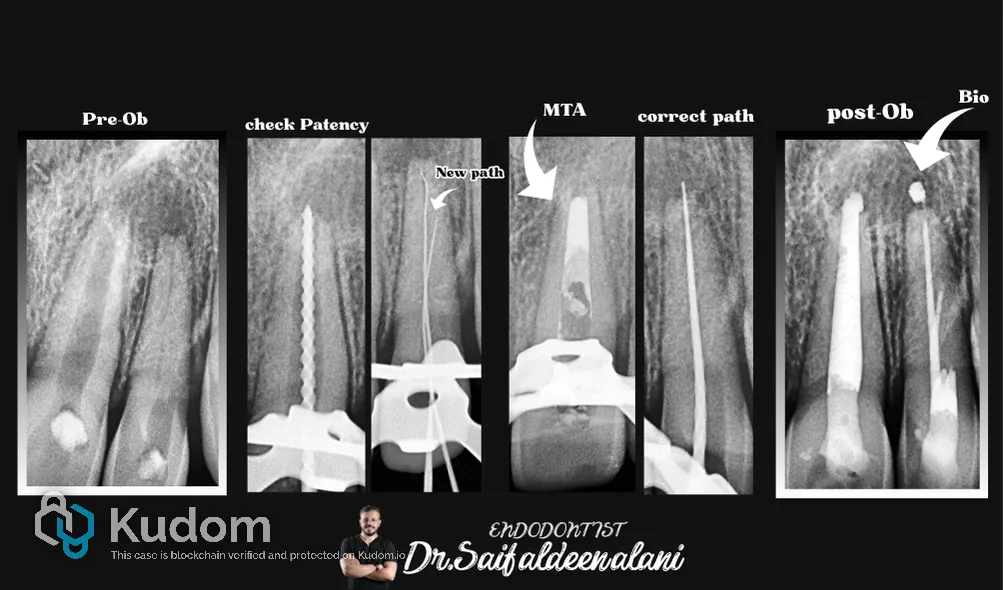
Endodontic Challenge
 Emre Övsay
Continuous rotation remains the most established and refined motion in nickel–titanium (NiTi) endodontic instrumentation. Although reciprocation offers mechanical safety and simplicity, continuous rotation provides superior shaping accuracy, smoother canal walls, and better debris removal dynamics, especially when used with modern heat-treated alloys and torque-controlled endodontic motors (1, 2). This review highlights the biomechanical and clinical advantages of rotational kinematics in preserving canal anatomy, optimizing cleaning efficacy, and reducing postoperative discomfort. 1. Introduction The introduction of engine-driven NiTi rotary systems in the 1990s marked a milestone in endodontic evolution, significantly reducing operator fatigue and procedural errors (1). Continuous rotation, characterized by uninterrupted 360° clockwise motion, remains the gold standard for canal shaping due to its ability to produce consistent, predictable enlargement…
Read the full case — free
Create a free Kudom account to read this case in full and browse the verified clinical library.